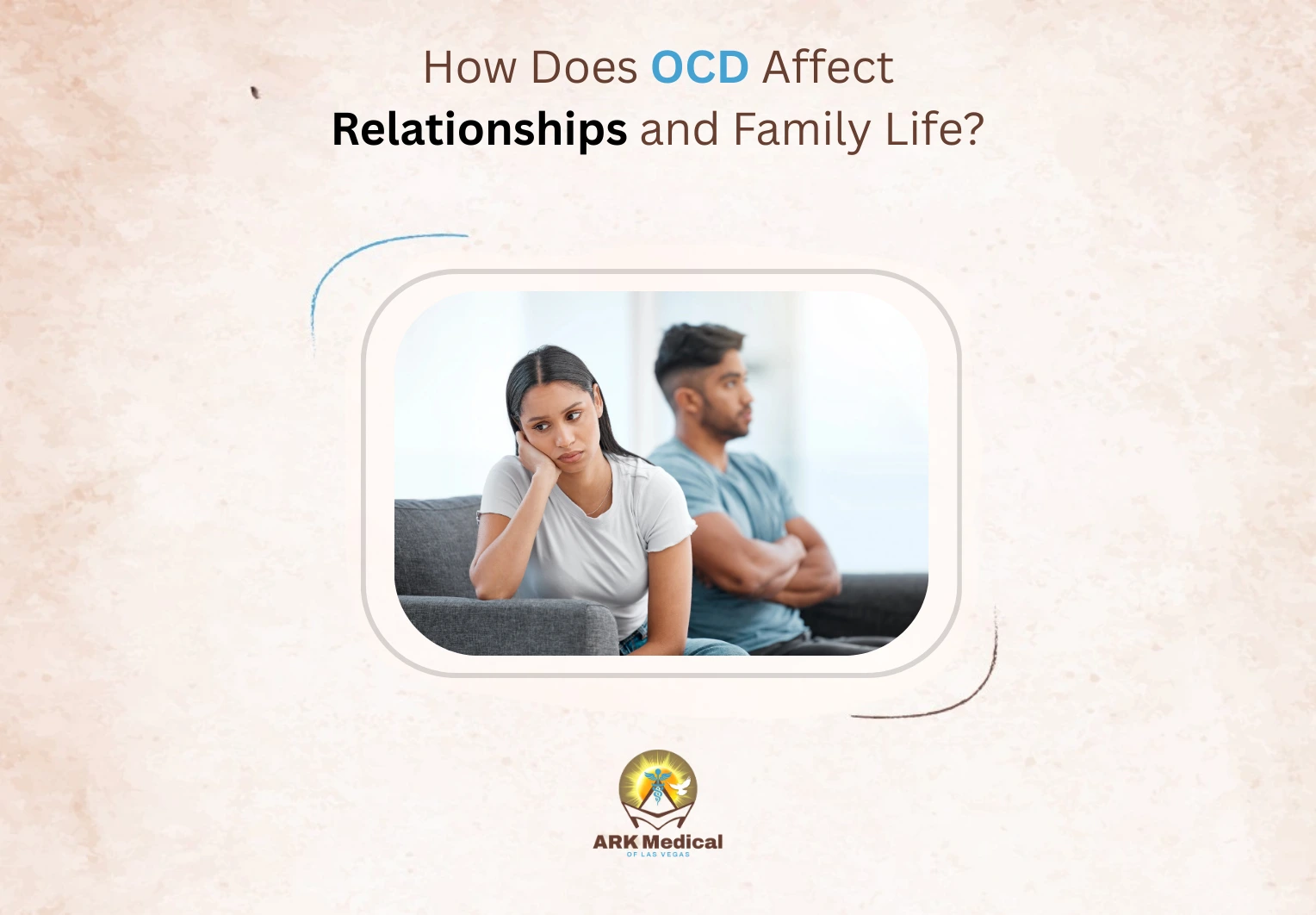
People with obsessive-compulsive disorder (OCD) don’t just have an impact on their own lives; it can also affect their relationships, family life, and daily routines. Individuals with OCD might be required to reassure or check or even conduct rituals with their partners, parents, or siblings as a way of keeping their condition of OCD under control.
Couples and families may be more understanding and set healthy limits if they know how OCD affects relationships. Couples can stay together and even get closer while dealing with the problems that come with OCD if they have the right tools, knowledge, and expert help.
The Basics of OCD in Relationships
What OCD Looks Like in Everyday Life
When OCD is a part of everyday life, its symptoms usually blend with normal interactions. People with OCD frequently have obsessions, which are thoughts that keep coming back and make them concerned. They often have compulsions, which are behaviors they perform repeatedly to soothe that fear.
Some examples of this are:
- Checking the locks, doors, or appliances over and over again
- Asking partners for help all the time
- Fear of hurting people you love
- Worries about cleaning too much or getting unclean
- Things you do in your head, such as counting or going over things you’ve done in the past
These actions aren’t merely habits; they’re driven by fear and a need for assurance, which could inadvertently involve family members.
Why OCD Often Affects Relationships
People in partnerships share routines, talk to each other, and support each other’s feelings and emotions. Because of this, OCD symptoms often affect both partners or family members.
For instance:
- A partner may need to be reassured over and over again
- Compulsive behaviors may lead plans to be put off
- Family members may unconsciously practice rituals
Realizing that these activities are the result of a mental health problem and not an intentional action can make life less frustrating and encourage understanding.
How OCD Affects Romantic Relationships
Communication Challenges
Individuals experiencing OCD might find it more difficult to communicate with one another in romantic relationships. Intrusive thoughts may lead individuals to repeat the same question or seek confirmation, which can accumulate stress over time.
Some typical patterns are:
- Asking the same questions over and over
- Concerns about safety or the relationship
- Not talking to others because of anxiety
Knowing that these actions are caused by anxiety might help partners remain patient when they talk to each other.
Changes in Daily Routines
Compulsions and avoidance habits can also get in the way of daily life.
Some examples are:
- Taking a long time to finish verifying rituals, repeatedly checking or confirming something
- Staying away from some locations or circumstances
- Spending more time getting ready to leave the house or finishing responsibilities
- Not fairly dividing household duties
Couples can better handle these problems if they talk openly with each other and have flexible schedules.
How OCD Affects Family Life
Parenting and OCD
If a parent has OCD, it could change the way the family does things and how they parent. Some parents are very afraid for their children’s safety, which can lead them to check on their children more or take other steps to safeguard them.
Some helpful ways are:
- Talking to kids about OCD in a way they can understand
- Keeping family routines the same
- Getting others to talk about their feelings openly
- Showing how to deal with problems in a healthy way
Families can deal with these problems and keep their homes happy if they are aware of them and get help.
Effects on Siblings and Extended Family
OCD can also impact other family members and siblings.
Some problems that could come up are:
- Extra attention is being focused on OCD symptoms
- Problems at family events or activities
- Not comprehending compulsive habits
Giving family members basic information on OCD will help them comprehend the disorder and respond with more compassion.
How to Support a Loved One With OCD
To help someone with OCD, you need to be patient, kind, and set reasonable limits. Here are some ways that have been shown to work:
- Learn more about OCD: Knowing the signs helps you respond with understanding instead of anger.
- Listening without judgement: Make a safe place for people to talk to each other honestly.
- Avoid excessive reassurance: Compulsive reassurance might make OCD behaviors worse without meaning to.
- Encourage getting professional help: The best way to cure OCD is with therapy, especially CBT and ERP.
- Put your own mental health first: You can’t pour from an empty cup.
This support can make a meaningful difference in managing OCD.
Practical Strategies for Healthier Relationships
Small, regular changes can make a big difference in the lives of people with OCD and their loved ones:
- Set up regular times to talk about your worries
- Make routines that are flexible and help you relax without making you feel like you have to do things
- Slowly help people break free from habitual behaviors
- Do relaxation exercises together, such as deep breathing or being aware of the present moment
These measures make it easier to talk to each other and help relationships last longer.
Treatment Options for OCD
Family support and adjustments in lifestyle can help, but professional treatment is often necessary for properly controlling OCD. Here are the primary choices that are based on evidence.
Therapy
People with OCD usually start with therapy as their first line of treatment. Cognitive Behavioral Therapy (CBT), especially Exposure and Response Prevention (ERP), is the best way to go. This strategy helps people gradually face situations that make them anxious while avoiding the need to engage in compulsive behaviors. Over time, this reduces both intrusive thoughts and the urge to do rituals.
Medication Management
For some people, medication can help with OCD symptoms by controlling brain chemicals that are linked to worry and obsessive thoughts. It works best when you use it with treatment. Based on your symptoms and needs, a doctor or nurse can tell you if medicine is right for you.
Integrated Mental Health Care
Many clinics now offer integrated mental health treatment, which means that therapy, medication management, and general health assistance are all part of the same plan. This method makes treatment easier to get for those with OCD, and it’s also easier to handle with daily tasks.
Can OCD Damage Relationships Long-Term?
Many people are afraid that OCD will ruin their relationships. OCD can be tough to live with, but with the right support, many couples and families can get through it.
If you don’t get help, your OCD symptoms could make you continually ask for reassurance, stay away from certain situations, or quarrel all the time. This might make both couples or family members feel stressed over time.
But these patterns can improve significantly with treatment and education. When couples regard OCD as an issue they both have to deal with instead of a fight between them, they usually talk to each other more and get to know each other better.
When to Seek Professional Help
If OCD symptoms start to get in the way of your daily life or relationships, getting professional therapy might be a good idea.
Some signs that you may need more support are:
- Lots of fights about compulsions
- Being emotionally drained in relationships
- Not going to social events or doing your duties
- Making anxiety or intrusive thoughts worse
Therapy, medication management, or a combination of the two may be used to reduce symptoms.
Conclusion
If someone in your family has OCD, it might change the way you talk to each other, do things, and how your family works. It’s not always easy to deal with intrusive thoughts and compulsive habits, but many couples and families do it with help and understanding.
People and families can better handle OCD symptoms and keep their relationships strong by learning about the disorder, setting healthy limits, and getting help from professionals.
If you or someone you care about has OCD and it’s hurting your family or relationships, Ark Medical of Las Vegas can help. Cecilio Gonzales, FNP-C and PMHNP-BC, offers full evaluations and treatments for people with OCD to help them deal with their symptoms and improve their health in general.
Related Posts:
FAQs
Can having OCD ruin a relationship?
OCD can make relationships stressful, but many couples can deal with it well by talking to each other, being understanding, and getting the right therapy.
What is relationship OCD?
Relationship OCD (ROCD) is a type of OCD in which intrusive thoughts center on uncertainties regarding a relationship or partner.
When should someone seek help for OCD?
If intrusive thoughts or compulsions make it hard to live your life, have relationships, or feel good about yourself, you might want to get professional therapy.