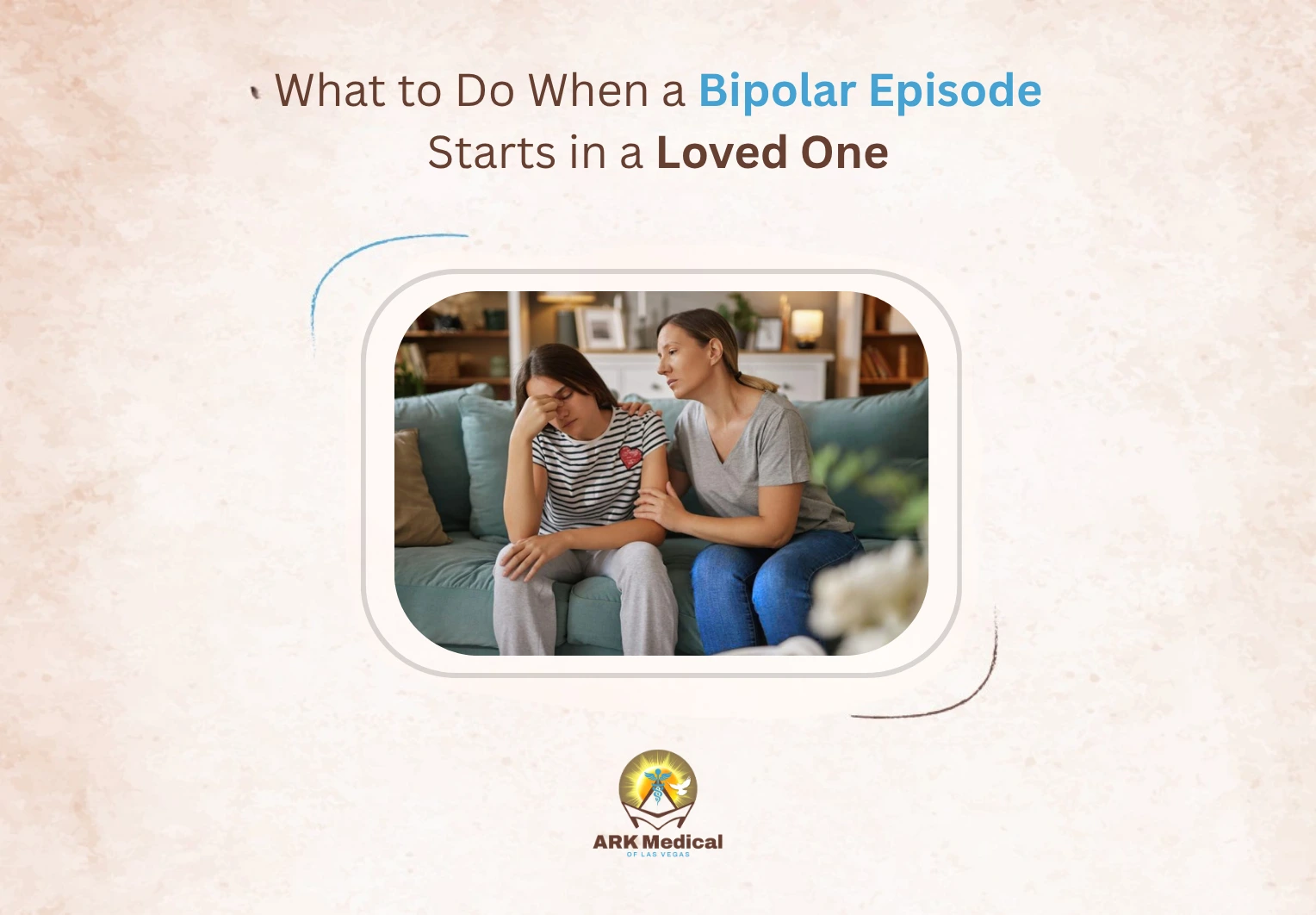
At the end of a long day, you are sitting back home, when you feel something is wrong. Your loved one, who appeared to be alright, becomes either unnaturally agitated, talking in a rush, or appearing unusually withdrawn. The transition may be bewildering, emotional, and difficult to comprehend.
These episodes might be the initial symptoms of a bipolar episode: a shift of mood, energy, and behavior, which can gradually evolve or can show up immediately. Being aware of what to do in a situation when a loved one begins their bipolar episode assists you in responding calmly, guarding the well-being of your family, and aiding your loved one without being scared and puzzled. The correct approach will help you to minimize stress, stay stable at home, and steer the situation towards a safer path.
What Is Bipolar Disorder?
A mental health condition known as bipolar disorder is associated with observable mood, energy, and behavioral changes. These alterations may be in the form of mood and activity elevation (mania or hypomania) and in the form of low mood, fatigue, and withdrawal (depression).
These mood attacks may influence the way an individual thinks, feels, and operates in their day-to-day lives. Given proper support and treatment, a large number of individuals with bipolar disorder can learn to cope with the symptoms and lead normal and healthy lives.
Recognizing the Earliest Signs of a Bipolar Episode
Often, bipolar episodes do not start with any dramatic and obvious alterations. They usually begin with the slightest changes, which can be easily ignored.
Asymptomatic features of a bipolar episode are common in the early stages, and include:
- Sleep habits (sleeping inadequately or excessively)
- Talkativeness or frenzied thoughts
- Irritability or restlessness
- Detachment towards family or day-to-day activities
- Unusual confidence or hasty decisions
These early changes may develop into different types of bipolar episodes, including mania, hypomania, or depression. There are more serious episodes that can involve signs of psychosis, whereby an individual might not be in touch with reality. These initial patterns can be identified to allow families to respond before the symptoms intensify.
Early identification of these symptoms of bipolar disorder can help families intervene early and avoid escalation.
Immediate Steps to Take When a Bipolar Episode Starts
The reaction that you have when a bipolar episode starts is important.
- Concentrate on serenity, security, and steadiness
- Calm down and keep sounds or activities to a minimum
- Talk kindly and evade conflict
- Make use of straightforward and encouraging language
- Eliminate sharp safety hazards (where necessary)
- Promote relaxation and a silent atmosphere
The measures will assist in avoiding the worsening of the situation and establish a feeling of security.
How to Support Without Taking Control
One needs to be empathetic and supportive of a person in their bipolar episode.
- Be a good listener and do not attempt to correct it all
- Offer choices instead of giving commands
- Validate their feelings without reinforcing harmful thoughts
- Be mindful and coherent
This will assist your loved one in feeling supported and, at the same time, preserve their dignity and autonomy.
What NOT to Do During a Bipolar Episode
It is equally as crucial as being aware of what to do.
Avoid:
- Debating on what is not real or not
- Yelling or displaying anger
- Dismissing their feelings
- Trying to force control unless safety is at risk
Being non-judgmental and calm will help to minimize the situation, avoid getting emotional, as well as fostering trust.
Protecting Your Own Well-Being
Helping someone that you love can be stressful. Your health is important, as well.
- Take short breaks when necessary
- Discuss with a person you confide in
- Keep simple routines for yourself and your family (regular meal times, consistent sleep schedules, basic daily activities)
- Build healthy boundaries of emotions (support them without absorbing their stress, recognize what you can control and what you cannot, rest and do not take anything personally)
Your loved one can be supported better when you stay grounded.
When to Seek Professional Help
Certain cases are in need of professional assistance. Seek help if:
- The symptoms become aggravated or persist for a few days
- There are safety concerns
- Daily functioning is affected
- Sleep, eating or behavior becomes extreme
When the symptoms have gotten out of control or the safety is at risk, it may be appropriate to find immediate medical or urgent care assistance to stabilize the situation.
Our team at Ark Medical of Las Vegas offers comprehensive mental and behavioral health care, assisting families in working through bipolar episodes through organized and sensitive care.
To investigate the personalized care options with your family, you can find out about our mental and behavioral health services at the Ark Medical of Las Vegas.
A Real-Life Example Families Relate To
In just a few days, a partner could realize that their loved one is sleeping less, talking more, and making impulsive choices. However, initially, it might be stress or excitement. But as trends keep on, the tension builds up in the household.
The situation may be managed by noticing the warning signs and responding without panic, decreasing stimuli, promoting sleep, and getting support, which would allow for stabilizing the situation before it becomes unmanageable.
Building a Family Plan for Future Episodes
Making preparations helps to curb fear and confusion.
- Make up an easy plan during stable periods
- Identify early warning signs
- Agree on actions to be taken
- Keep communication open
A plan gives assurance and certainty to the whole family
Conclusion
Being aware of what you can do in case a loved one begins to have a bipolar episode can make a significant impact on your whole family; making an early identification, responding soothingly, and using reassuring words and phrases aid in eliminating stress and avoiding the situation. You are not expected to manage this alone.
Families are able to come through these times with greater assurance and bonding with the right support and guidance.
You can contact us today in case you are worried about a loved one. At Ark Medical of Las Vegas, we are there to give care humanely and expediently that aids individuals and families.
Related Posts:
- What Happens When You Ignore a Bipolar Person?
- How Long Does Psychosis Last in Bipolar Disorder?
- How Common Is Bipolar Mood Disorder?
FAQs
How can I tell if it’s a bipolar episode or just stress?
Watch out for any changes in sleep, energy and behavior that are more than typical and are not in the usual patterns.
How do I help someone during a bipolar episode?
Be cool, don’t be judgmental, ensure you listen and promote professional help when necessary.
Can bipolar episodes be prevented?
Although this may not be preventable, it can be minimized in terms of frequency and severity through early detection and proper management.