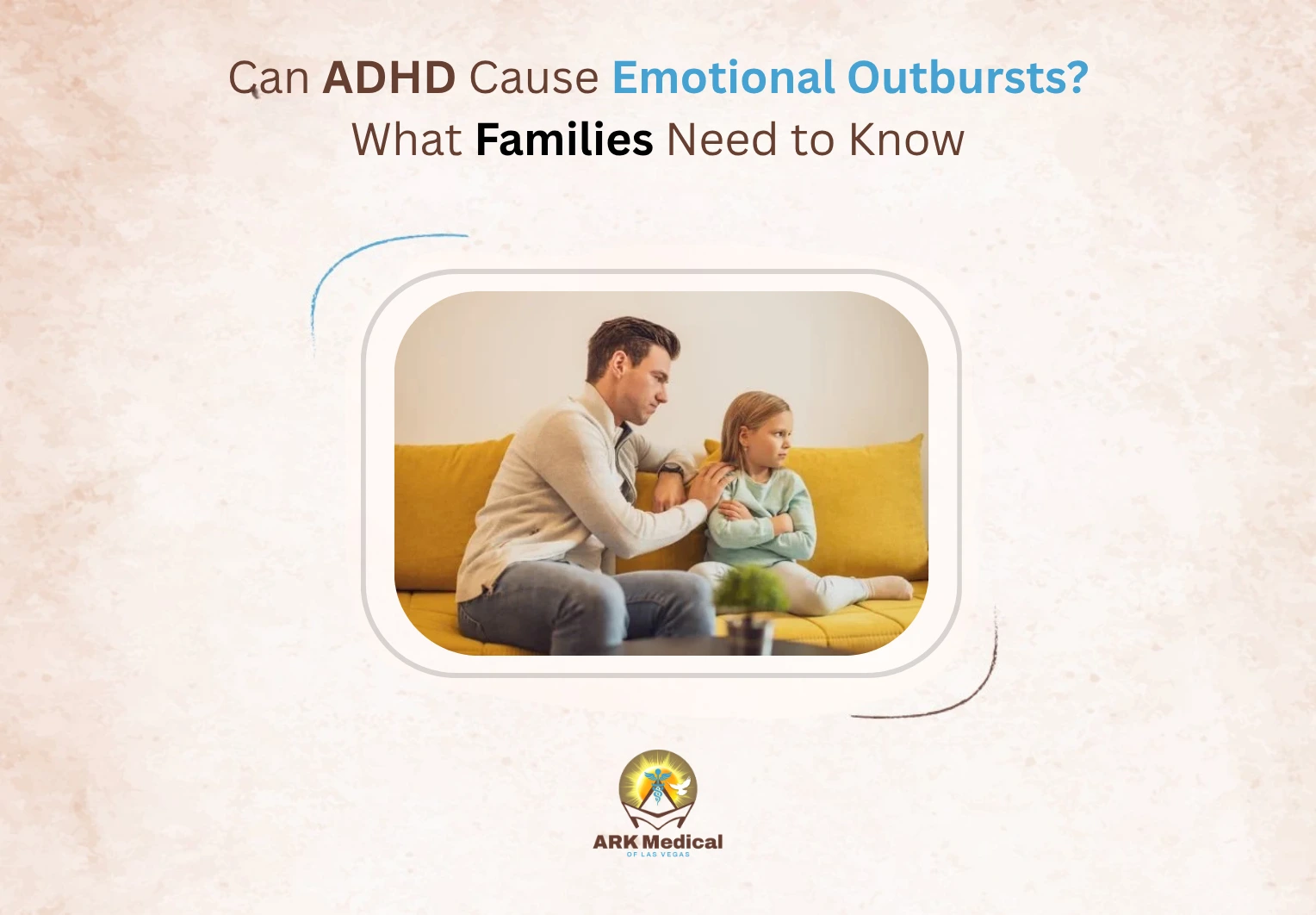
A small moment can quickly feel overwhelming. The kid overreacts to homework, a change of schedule, or even the word “no,” and it’s difficult to bring the situation down. Parents ask themselves: Is this normal or something more?
Attention-deficit/hyperactivity disorder (ADHD) is more than a disorder of attention or hyperactivity; it involves emotions. Emotional outbursts are one of the many symptoms of ADHD, and for many families, this is the most difficult one. Learning why it occurs and how to respond can add to peace, clarity, and confidence in families.
What Is ADHD? A Simple Explanation for Families
Attention-deficit/hyperactivity disorder (ADHD) is a neurodevelopmental disorder that can impact how a person regulates their attention, impulses, and emotions. It is often linked with being distracted or hyperactive, but it is also important for regulating emotions.
Children with ADHD may:
- Have fast and impulsive reactions
- Have more intense emotions
- Have difficulty changing emotions
This doesn’t just show in outward behavior but also in the way the brain responds to situations in the moment.
ADHD Looks Different in Every Child
Some children are fidgety and hyperactive; others are more passive but have strong reactions. They also have positive qualities like imagination, passion, and empathy.
Can ADHD Cause Emotional Outbursts?
Yes, people with ADHD can have emotional outbursts, as it impacts the brain’s ability to manage emotions and impulses.
Outbursts are not deliberate or manipulative. Rather, they occur when emotions are “fired” rapidly, and the brain has trouble slowing them down and calming the mind. Children with ADHD feel emotions:
- Faster
- More intensely
- For a longer time before recovering
What Emotional Outbursts May Look Like
- Feeling easily frustrated and upset
- Crying, yelling, or using a loud voice
- Taking a long time to calm down
- Mood changes during the day
These responses are distressing for the child, although we may think they’re overreacting to the situation.
Why ADHD Leads to Emotional Outbursts
Difficulty with Emotional Regulation
The part of the brain that helps regulate emotions can function unpredictably in ADHD. This can be frustrating in stressful situations.
Impulsivity and Immediate Reactions
Impulsivity impacts emotions as well as actions. Emotions can lead to reacting without thinking first.
Low Frustration Tolerance
Perceived difficulties in life, such as waiting, making a mistake, or having plans interrupted, can feel more overwhelming.
Sensory Overload and Environmental Stress
Environments that are busy, loud, or have too many distractions can be difficult to cope with and can lead to emotional outbursts.
Emotional Outbursts vs Typical Childhood Behavior
It’s normal for all children to be emotional. But ADHD can affect the frequency, magnitude, and duration.
When It May Be More Than Typical Behavior
- Outbursts happen often
- Responses are more intense than normal
- It takes a long time to recover
- Home and/or school life is disrupted
These behaviors might indicate the child needs more emotional regulation support, not discipline.
Common Triggers Parents Should Watch For
This knowledge will help parents avoid meltdowns. Common triggers include:
- Disruptions to routine
- Transitions between activities
- Fatigue or hunger
- Noisy or busy places
- Not being listened to
Being aware of these triggers allows for earlier intervention by parents.
How Parents Can Respond During an Emotional Outburst
Stay Calm and Grounded
Kids tend to copy adults. Their reactions are likely to be less intense if you are calm.
Reduce Stimulation
Turn down the volume, dim the lights, or move to a quiet place, if possible.
Use Simple, Clear Communication
Speaking in short statements with a lot of encouragement is more effective than giving long explanations.
Focus on Calming First
Don’t correct or discipline. Emotional regulation comes before problem-solving.
Long-Term Strategies to Reduce Emotional Outbursts
Build Predictable Routines
Routine helps ease stress and provides a sense of security.
Teach Emotional Awareness
Teach children to identify their emotions for better understanding and control.
Practice Coping Skills
Deep breathing, sitting alone, or taking a break from the situation can be helpful.
Encourage Positive Reinforcement
Acknowledging small steps promotes self-confidence and development.
Supporting Emotional Well-Being at Home
Create a Safe Emotional Space
Children need to feel their feelings are valid, even if their responses need support.
Keep Communication Consistent
Consistency across parents, teachers, and caregivers provides predictability for children.
When to Seek Professional Support
It may be time to seek help if your child’s outbursts:
- Interfere at school or home
- Interfere with relationships with others
- Become more severe or frequent
- Make recovery more challenging for the child
Early support can assist families to feel more informed and ready.
How Professional Care Can Help
Professional care is about developing an understanding of the child’s needs and strategies that can be used in everyday life. This may include:
- Careful analysis of emotions and behaviors
- Advice for parents’ reactions
- Individualized approaches to regulate emotions
- Continuing strategies and adaptations
In Las Vegas, families can find integrated care supports that take into account both emotional and physical health, easing this process.
The Role of Family-Centered Mental Health Care
ADHD impacts the whole family. When families are involved, all family members feel supported. This includes:
- Supporting parents to feel confident about their parenting
- Providing strategies for multiple settings
- Promoting good mental health for parents and children
This leads to improved relationships and a more positive home environment.
Conclusion
Emotional flare-ups in ADHD are not due to “misbehavior” but reflect the way the brain is wired to respond with emotions. These outbursts can be reduced with understanding, patience, and support. Small changes can have a big impact.
With support, children can learn how to better manage their emotions, and families can learn to engage in a more balanced way. If you’re concerned about ongoing issues, seeking professional help can help bring clarity and peace of mind.
FAQs
Can ADHD cause anger issues in children?
Yes, it is hard for children with ADHD to regulate emotions, leading to anger and frustration.
Are emotional outbursts intentional?
No. These reactions are a result of how the brain processes emotions, not a deliberate choice.
How can I calm my child during an outburst?
Stay calm, reduce stimulation, and use simple, reassuring communication.
Will emotional outbursts improve over time?
With support and consistent strategies, many children develop better emotional regulation skills.