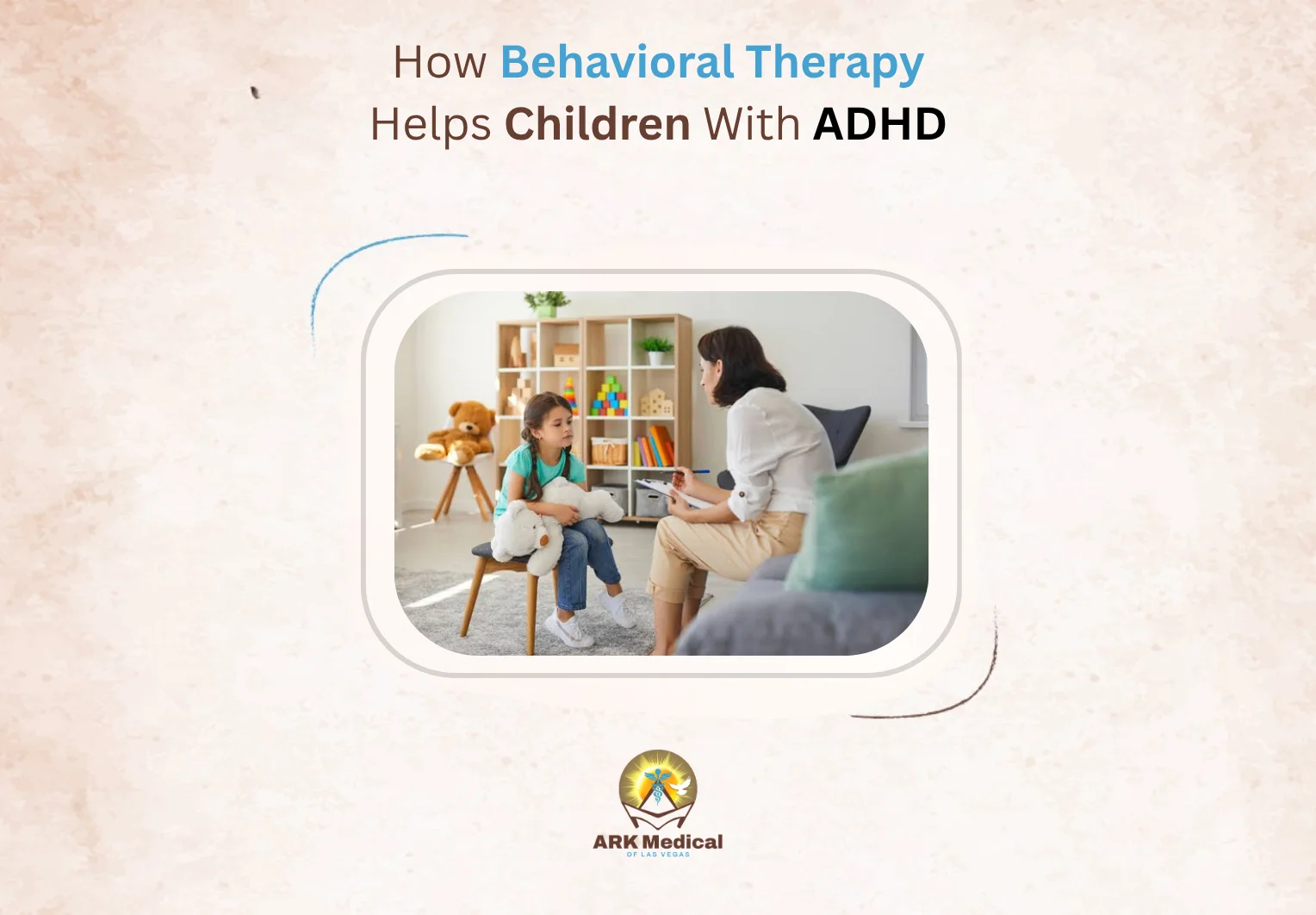
Parenting a child with ADHD may be tough, whether it’s dealing with hyperactivity and impulsivity or helping them stay focused and regulate emotions.
Behavioral therapy is one of the best strategies to develop good habits, enhance conduct, and establish family ties. Ark Medical of Las Vegas provides families with a complete approach to mental health and family practice services to assist children with ADHD in succeeding.
What Is ADHD in Children and Why Does It Matter?
Attention Deficit Hyperactivity Disorder (ADHD) is a prevalent neurological developmental disorder that impacts a child’s brain functions concerning attention, impulse regulation, and activity levels. Kids with ADHD may struggle to focus on a task, arrange work, or wait their turn. Some are primarily inattentive, some are more hyperactive and impulsive, and many are a combination of both.
The obstacles are more than “just kid stuff.” Without the correct help, ADHD can impact academic performance, friendships, self-esteem, and family dynamics. The good news is that early, persistent intervention, like behavioral therapy, can give children tools they can use for life. It doesn’t change who your child is, but it helps them learn techniques to be successful in their own way.
Understanding Behavioral Therapy for ADHD
Behavioral therapy aims to change specific behaviors and promote positive habits by using systematic methods, positive reinforcement, and skill development. Behavioral therapy is realistic and contemporary, unlike some other treatments that focus on the emotional or historical. It gives kids (and parents, too, typically) real tools they may use in day-to-day circumstances.
This kind of therapy is typically advised as a first-line choice for kids with ADHD, especially younger ones. It can be used alone or, where appropriate, in combination with medication. The beauty is that it’s flexible; you can adapt it to your child’s age, personality, and individual difficulties, whether it’s finishing chores, handling frustration, or boosting focus during homework.
How Behavioral Therapy Actually Helps Children With ADHD
Behavioral therapy breaks down the main problems of ADHD into small, manageable steps and reinforces progress one step at a time.
Improving Attention and Focus
Such tactics include task breakdowns, routines, and self-monitoring measures used by therapists. A youngster may learn to use timers, checklists, or visual cues. These strategies support the brain in learning how to sustain attention over time in a way that is supportive and makes school and daily responsibilities feel less stressful.
Building Impulse Control and Emotional Regulation
Lots of kids with ADHD do things before they think. Behavioral treatment involves pause tactics, role-playing scenarios, and reward systems that encourage thinking before acting. Kids learn how to identify their feelings, take soothing breaths, or employ “stop and think” skills that lead to fewer meltdowns and better relationships with siblings, classmates, and teachers.
Strengthening Organizational and Social Skills
Therapy sessions cover real-life situations, from having an ordered knapsack to taking turns in games. Parents are often included through parent training components to acquire consistent tactics to employ at home. This way, you present a united front, and the youngster feels supported, not condemned.
Boosting Self-Esteem and Motivation
Constant corrections might undermine a child’s confidence. Behavioral therapy is about positive reinforcement, praising the minor gains and effort, rather than just pointing out flaws. It gives a sense of competence and motivates kids to keep trying even when things feel challenging.
As these skills begin to take root, families frequently see better collaboration at home, better report cards, and better friendships. This is a slow process, but an empowering one for the child and parents.
Key Types of Behavioral Therapy Used for ADHD
There are several ways under the banner of behavioral therapy, and clinicians often mix and match features to best suit the individual.
Parent training programs offer caregivers evidence-based strategies to set clear expectations, provide appropriate praise, and regularly manage tough behaviors. This is especially valuable because the parents become active partners in the process.
The kid also participates in individual therapy sessions that are skills-based and geared to their individual requirements, and typically include games or activities that make learning fun. These benefits can be translated to the classroom level through school-based support in partnership with instructors.
The most successful programs are unique and may change as your child matures.
At Ark Medical of Las Vegas, we can seamlessly treat ADHD and any co-occurring conditions, such as anxiety or learning problems, because of our integrated approach to mental health and family medicine.
Practical Tips for Supporting Behavioral Therapy at Home
Therapy works best when it goes beyond the office. Some friendly, ordinary approaches to reinforce progress include:
- Create consistent daily routines for meals, schoolwork, and bedtime; many kids with ADHD want the structure these bring.
- Be specific and immediate with appreciation. Instead of saying generally, “I love how you put away your shoes right after I asked.”
- Make chore/responsibility plans or schedules to eliminate confusion about expectations and reduce nagging.
- Break large projects into tiny segments and celebrate each one to build momentum.
- Be a model of calm problem-solving. Children learn a great deal by observing how adults handle irritation or distractions.
Consistency is more important than perfection. A little constant effort on the part of the parents helps a great deal. Communicate freely with your child’s therapist about what’s working (and what isn’t) so that the plan can be altered.
When to Consider Behavioral Therapy for Your Child
If your child’s ADHD symptoms are interfering with school, home life, or social connections, behavioral therapy is worth trying. This is especially useful for little kids, but older kids can benefit too. Many families start here before or together with thinking about medication.
Getting in early is frequently the key to better outcomes down the road, including doing better in school and feeling better emotionally. A trained provider can assist in establishing the correct combination of supports through a thorough review.
The Role of Integrated Care in Treating Childhood ADHD
ADHD seldom occurs in isolation. Many youngsters do well with a holistic approach that takes into account physical health, family situation, and any overlapping disorders. Our specialists at Ark Medical of Las Vegas have experience in both family medicine and psychiatric mental health, so they can give you integrated support under one roof. This implies that suggestions for behavioral therapy can easily tie into wellness checkups, medication management if needed, or extra counseling.
We believe in working with families, not doing the same thing for everyone. Every child’s path is different, and we want to see them thrive in their own unique way.
Moving Forward with Hope and Practical Support
Behavioral treatment provides youngsters with ADHD with practical tools to learn how to navigate their world better. It promotes skills, confidence, and resilience that go much beyond symptom management; it helps youngsters find their strengths and develop a good sense of self.
If you’re worried about your child’s attention, conduct, or emotional regulation, you don’t have to tackle it on your own. Contact Ark Medical of Las Vegas for compassionate, knowledgeable counsel specific to your family’s requirements. Based in Las Vegas, we provide integrated mental health, family practice, and supportive treatment for both children and parents.
You’re already doing a wonderful thing by educating yourself more. With the correct help, your child can thrive, and your whole family can feel more balanced and hopeful.
This information is for educational purposes only and is not intended to be a substitute for professional medical or mental health advice. Please consult a certified professional for individual suggestions.
Related Posts:
FAQs
How long does behavioral therapy typically take to show results?
Many families experience favorable changes within a few weeks or a few months, but the development of enduring abilities is a process that takes time. The most important thing is being consistent at home and having regular sessions.
Is behavioral therapy only for young children?
Nope. While it is typically suggested to start early, older children and teens can still benefit from tailored programs that concentrate on school, social interactions, and independence.
Do parents need to participate in therapy sessions?
Parent engagement is frequently a major aspect of success. Many organizations include parent training to help you effectively reinforce skills at home.