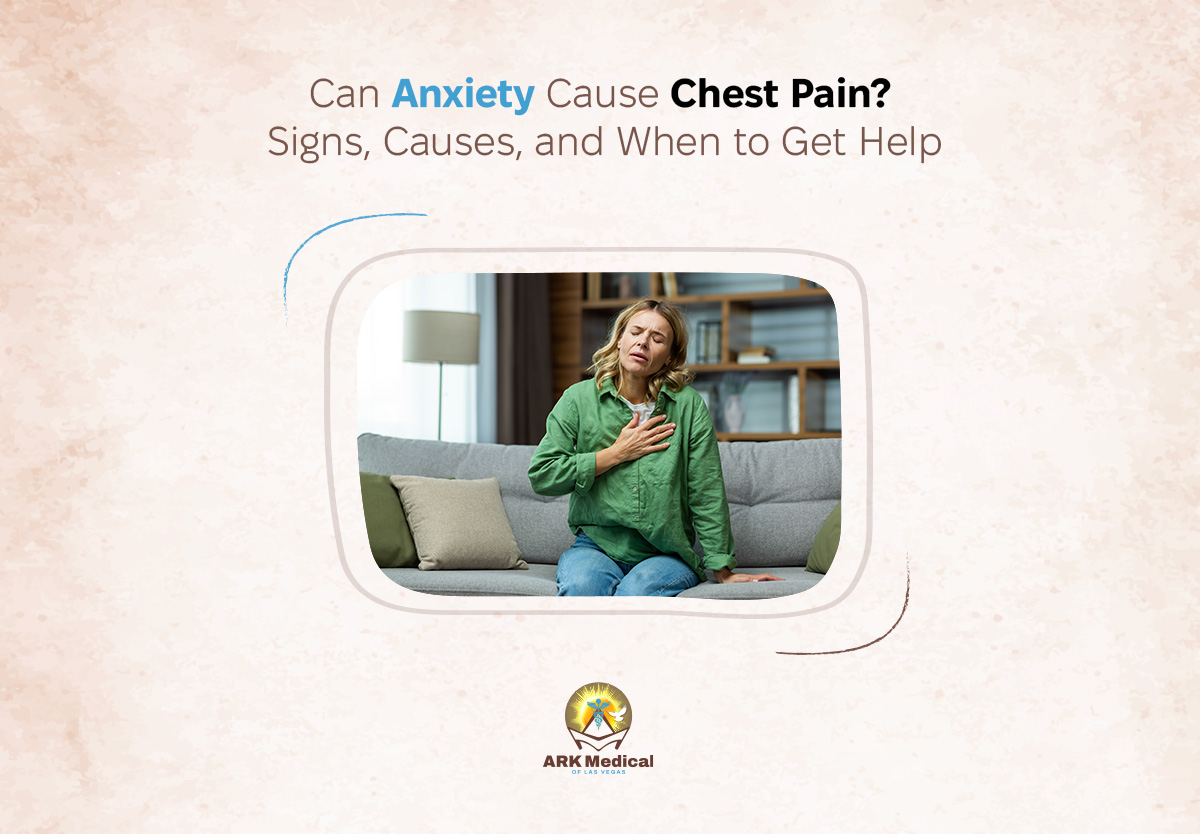
It often happens when someone is in the middle of work and feels tightness or pressure in their chest. You start to wonder if it’s anxietyor if something is really wrong with your heart when it keeps racing.
If this sounds familiar, you’re not the only one. Chest pain is one of the most common physical signs of anxiety that makes people go to an urgent care or emergency room. But anxiety can feel like chest pain, and knowing how and why it happens may help you deal with it better.
This article will talk about what it’s like to have chest pain that you think is caused by anxiety, why it happens, how to tell the difference between it and more serious conditions, and when to see a doctor. With real-world experience, Ark Medical of Las Vegas helps make things clear, useful, and easy to understand, whether you are an anxiety sufferer or helping a loved one.
How Anxiety Affects the Body
Anxiety isn’t “just in your head.” It is a reaction that happens all across your body to keep you safe. When your brain perceives or feels a threat, it activates its fight-or-flight reaction.
This reaction makes the body change in some ways, such as:
- Faster heart rate
- Muscle tension
- Rapid or shallow breathing
- Increased alertness
This system is helpful in real emergencies, but it can also be triggered by everyday stressors like work, family, or constant digital stimulation. Your body will react as if you are in danger even when you are not, when that happens.
The heart, lungs, and chest muscles are all directly involved in this stress response, which is why people often feel chest pain.
It’s important to note that anxiety can affect people of all ages. Adults can feel chest pressure when they are under a lot of stress. Teenagers tend to feel it right before an exam or a social event, and kids can say it feels tight, strange, or even like a pain that goes up to the stomach.
What Does Anxiety-Related Chest Pain Feel Like?
It is an unsettling feeling; chest pain from anxiety can be different for each person. It might not always feel like “pain” in the usual way.
Common sensations include:
- Chest tightness or chest pressure
- A grip, a narrowing sensation
- Sharp, brief pains that come and go
- A heavy or full sensation
- Pain in the chest along with an increased heart rate
All of these feelings tend to come out of the blue and get worse when anxious thoughts increase. They usually calm down after the anxiety has been resolved, but when they occur, they may be severe.
Other symptoms of anxiety may be present at the same time, and they include:
- Shortness of breath
- Lightheadedness or dizziness
- Sweating
- Tingling in the hands or face
- A feeling of losing control
Keeping track of when these symptoms happen and how you feel at that time can help you spot patterns and learn how to get over your fears over time.
Why Anxiety Can Cause Chest Pain
Physical Causes
Anxiety affects the chest in several physical ways:
- Muscle tension: Anxiety tightens the muscles in the chest wall and ribs, which can cause pain or pressure.
- Change in breathing: Breathing quickly or shallowly can make you feel like you
need air or have a tight chest.
- Nervous system activation: Stress hormones increase heart rate and blood pressure, making chest sensations more noticeable.
These reactions are uncomfortable but not dangerous on their own.
Emotional and Lifestyle Factors
Certain behaviors and emotional patterns increase the likelihood of chest pain linked to anxiety:
- Chronic stress or constant worry
- Panic attacks or health anxiety
- Sleep that isn’t enough or irregular
- Excess energy drinks or caffeine
- Living a sedentary life
Family stress, academic pressure, or financial worries can also make anxiety symptoms worse, especially when it’s spread out among family members.
Anxiety Chest Pain vs. Heart Problems: How to Tell the Difference
Because chest pain can signal serious conditions, it’s important not to dismiss symptoms. However, some general differences can help guide your next step.
| Feature | Anxiety-Related Chest Pain | Possible Heart-Related Pain |
| Duration | Comes and goes, often short-lived | Persistent or worsening |
| Triggers | Stress, worry, panic | Physical exertion can occur at rest |
| Pain Pattern | Sharp, tight, or shifting | Heavy pressure or crushing pain |
| Radiation | Usually stays in the chest | May spread to the arm, jaw, neck, or back |
| Response to Calm | Often gets better with relaxation or rest | Often does not improve |
Immediate medical attention should be sought in case the chest pain is accompanied by:
- Severe shortness of breath
- Nausea or vomiting
- Cold sweats
- Fainting or weakness
- Extent of pain to the arm, jaw, or back
When you’re not sure, it’s always best to be safe and get checked out.
When to Get Professional Help
You should get medical help if:
- Chest discomfort is of a longer duration than the typical episodes of anxiety.
- Symptoms are common or on the rise.
- This is the first time you are experiencing pain in the chest.
- Anxiety is disrupting day-to-day life, careers, or relationships.
- A teenager or child has been experiencing chest pains.
Ark Medical of Las Vegas also provides telemedicine sessions, so it is not difficult to receive professional advice without the stress of visiting the clinic.
How to Relieve Anxiety-Related Chest Pain
Immediate Relief Techniques
When symptoms strike:
- Breathe slowly: Breathe deeply, breathing in through the nose and breathing out slowly.
- Change position: Sit erectly in order to open the chest.
- Apply grounding techniques (name what you can see, hear, and touch)
- Take a short, gentle walk
These minor physical changes can give signals to your nervous system that can make it relax.
Long-Term Management Strategies
Developing routines and consistent habits are required to avoid future such incidents:
- Cognitive behavioral therapy (CBT) or anxiety-focused counseling
- Regular physical activity
- Mindfulness or relaxation practices
- Reducing caffeine intake
- Maintaining consistent sleep routines
Strategies that are family-based, such as joint breathing or open discussions of stress, can be effective too.
Preventing Anxiety-Related Chest Pain
Building resilience will reduce anxiety, along with its physical symptoms. Think about:
- Creating a daily routine
- Organizing regular mental health check-ins
- Encouraging family communication about stress
- Integration of mental health care and routine physical examination
- Creating predictable daily routines
- Scheduling regular mental health check-ins
- Encouraging open family discussions about stress
- Pairing mental health care with routine physical exams
In Ark Medical of Las Vegas, we emphasize whole person care because one’s emotional and physical health are interlinked.
Final Thoughts
Chest pain can be produced by anxiety, and although this can be frightening, it can be managed properly with the right knowledge and support. Knowing how the manifestation of anxiety occurs within the body will prepare you to respond without having to react from a position of fear.
If you or a loved one is havi
ng symptoms related to anxiety, Cecilio Gonzales, FNP-C, PMHNP-BC, USMLE/ ECFMG certified at Ark Medical of Las Vegas, offers help with compassion and convenient care, including virtual care.
Call us at 725-204-9792 or visit our website to set up an appointment.
FAQs
Can anxiety really cause chest pain?
Yes. Anxiety can trigger muscle tension, rapid breathing, and nervous system changes that cause chest tightness or pain.
What does anxiety chest pain feel like?
It may feel like tightness, pressure, sharp twinges, or a heavy sensation in the chest, often coming and going with stress.