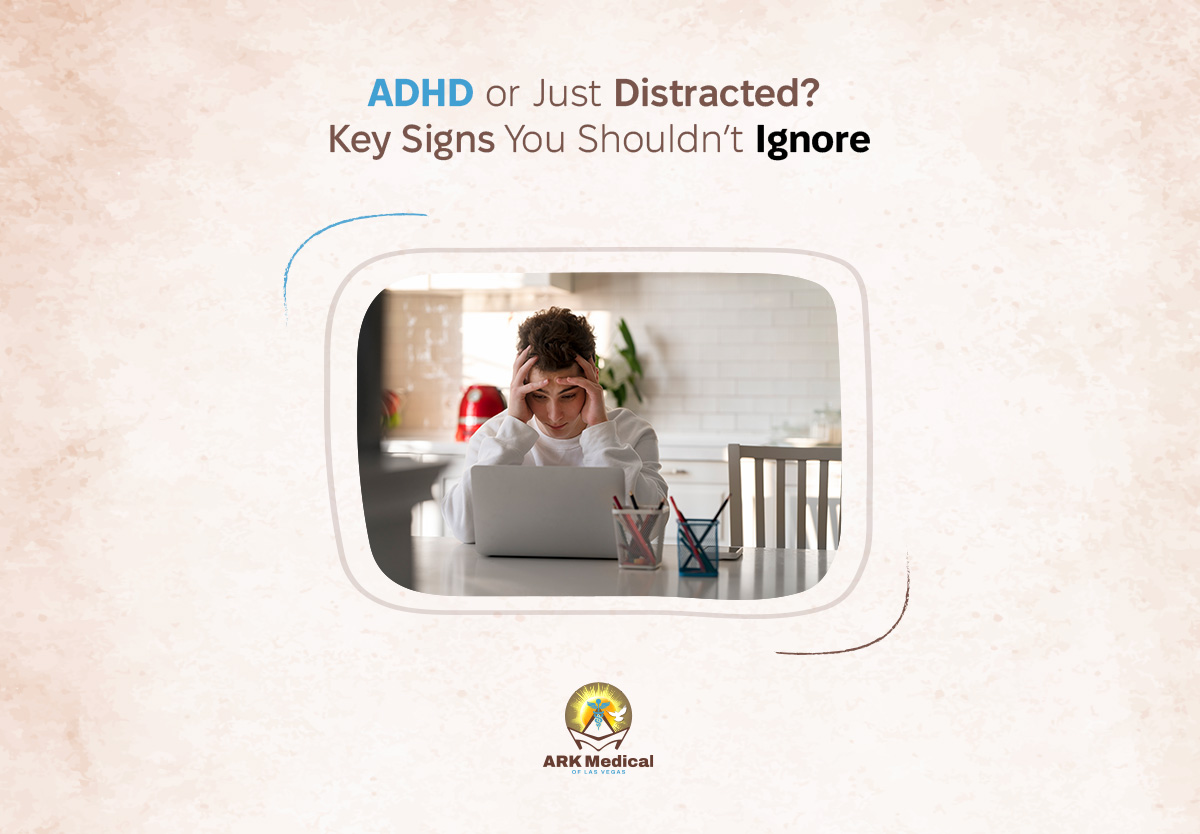
It’s easy to get distracted. It’s easy to lose focus these days because of all the phone notifications and deadlines that are always comingup.
But what if your problems with being inattentive, impulsive, or restless feel like a never-ending fight? It could be a sign of Attention-Deficit/Hyperactivity Disorder (ADHD), not just a normal distraction.
It is important to know the difference between being distracted sometimes or having ADHD all the time. We’ll look at the signs that are common in both kids and adults, and we’ll give you clear, useful steps to take if you think you or someone you care about might have ADHD.
What Is ADHD?
Attention, impulse control, and activity levels are all affected by ADHD, which is a neurodevelopmental disorder. Attention deficit hyperactivity disorder (ADHD) is more than just being easily distracted; it’s a pattern of behavior that happens in many places, like at home, school, and work. It’s important to understand that ADHD isn’t caused by bad parenting or being lazy. It’s a brain-based condition that can be controlled well with the right help.
What makes ADHD different from normal distractions?
We all lose focus from time to time, but ADHD is different. Here’s how:
- ADHD doesn’t change. The symptoms can last for a long time, sometimes even months or years, and they can make everyday life very difficult.
- Situational distractions are common in everyday life. It usually has a clear cause, like stress, boredom, or not getting enough sleep, and it usually goes away when the situation changes.
- It’s not a “problem with behavior”. One of the biggest lies about ADHD is that punishment can “fix” it. It actually responds best to structure, understanding, and specific strategies that are meant to help control its symptoms.
Key Signs You Might Be Missing
Common Signs of ADHD in Children
- Trouble staying focused on schoolwork or play.
- Often forgetting things like homework, personal items, and instructions.
- Moving around, talking too much, and having trouble waiting for your turn.
- Acting on impulse like interrupting or doing things without thinking.
- Getting angry or upset quickly for no good reason.
How ADHD Manifests in Teenagers
- School performance is getting worse even though they seem to be able to do it.
- Having trouble making plans, setting priorities, and meeting deadlines.
- Being restless, taking risks, or acting on impulse online or in social situations.
- Not wanting to do long or hard tasks like homework or applications.
Recognizing ADHD in Adults
- Always being disorganized and missing deadlines.
- Often being late, forgetting appointments, or losing things.
- Relationship problems caused by zoning out or interrupting.
- Feeling mentally “scattered”, putting things off, and having trouble finishing projects.
Is it ADHD or Am I Just Easily Distracted?
We all have moments when our minds wander. Maybe you find yourself scrolling through your phone during a meeting or forgetting what you walked into a room for. It’s easy to label these moments as “so ADHD”, but how do you know if it’s just a normal level of distraction or something more?
If you’re wondering whether your attention issues are a sign of ADHD, here are a few key differences to consider.
How long have you been feeling this way?
One of the main signs of ADHD is that the symptoms are long-lasting and consistent. We’re not talking about a tough week where you felt scattered. For an ADHD diagnosis, symptoms like inattention or hyperactivity need to be present for at least six months.
How is it affecting your daily life?
Everyone gets distracted sometimes, but for people with ADHD, these challenges can seriously impact major areas of life. If you’re consistently struggling to meet deadlines at work, finding it hard to maintain relationships because you’re not fully present, or falling behind in school, it might be more than just a simple lack of focus.
Have you ruled out other factors?
Sometimes, things that look like ADHD are actually caused by something else. Lifestyle factors can play a huge role in our ability to concentrate. For example:
- Lack of sleep: Not getting enough rest can make anyone feel foggy and unfocused.
- High stress: Chronic stress puts your brain on high alert, making it difficult to concentrate on one thing.
- Poor nutrition: What you eat affects your brain function.
- Too much screen time: Constant digital stimulation can shorten your attention span.
If you address these areas, get more sleep, manage stress, eat better, and take screen breaks, and still find yourself struggling, it might be time to consider an evaluation for ADHD.
Does it happen everywhere?
Think about where your attention issues show up. Is it only during that one boring weekly meeting, or does it happen across different areas of your life? A key characteristic of ADHD is that symptoms are present in multiple settings. For example, a person with ADHD will likely show signs of inattention at work, at home, and in social situations, not just when they’re faced with a task, they find uninteresting. If your difficulty concentrating is limited to a specific environment, it’s more likely a situational issue rather than ADHD.
Common Causes of Distraction (That Aren’t ADHD)
- Lifestyle: Sleep deprivation, busy multitasking, heavy social media use.
- Stress and anxiety: Worry hijacks attention.
- Boredom or lack of challenge: Tasks that don’t fit ability or interest lead to zoning out.
- Environment: Clutter, noise, or inconsistent routines.
Why Early Identification Matters
Diagnosing ADHD early can help families make healthy routines, stop academic declines, and lessen emotional distress. Early help, such as behavior strategies, changes to the classroom, and, when necessary, medical treatment, leads to better long-term results.
When You Should Seek Professional Help
Red Flags Parents Shouldn’t Ignore
- Symptoms lasting more than six months.
- Problems in multiple settings (home + school).
- Clear interference with learning, social life, or safety.
ADHD Medication Options
For a lot of people, medication is a game-changer that regulates things down and makes it easier to use other methods.
- Stimulants and Non-Stimulants: Depending on your biology and needs, there are different types of medications available.
- Speak to a doctor: Choosing to take medication is a very personal decision. It’s important to talk to a qualified healthcare provider about the benefits and side effects of your treatment and find the right one for you.
Final Thoughts
It can be hard to tell the difference between ADHD and normal distraction, but looking for patterns that happen in different places, paying attention to how it affects daily life, and getting a professional evaluation if you’re still worried, will help. If you’re not sure, start by getting more sleep, making a schedule, and talking to a primary care doctor or a behavioral specialist for advice. Early help really does make a difference.
FAQs
Can adults develop ADHD later?
ADHD often starts in childhood, but some people are diagnosed as adults when symptoms become disruptive.
Does screen time cause ADHD?
It can worsen attention problems but doesn’t cause ADHD by itself.
Can ADHD be managed without medication?
Many people see big gains with behavioral strategies and lifestyle changes; medication may still be helpful for some.